How to Use a Portable Jump Starter Safely
A portable jump starter can be one of the most useful emergency tools in your vehicle. However, it’s important to use it correctly.
Before using any jump starter, always read the manufacturer’s instructions because connection procedures and specifications can vary between models.
Step 1: Park Safely
Move your vehicle to a safe location if possible.
Turn off the engine and switch off unnecessary electrical equipment such as lights, radio, and air conditioning.
Make sure the vehicle is in Park for an automatic transmission or in the appropriate neutral/parked position for your vehicle.
Step 2: Check the Jump Starter
Before connecting the device, make sure the jump starter has sufficient charge.
Inspect the cables and clamps for visible damage.
Do not use a damaged jump starter or damaged cables.
Step 3: Locate the Battery
Open the hood and locate the vehicle’s battery or approved jump-start terminals.
If your vehicle uses remote jump-start terminals, use the locations specified in the owner’s manual.
Step 4: Connect the Clamps
For a conventional battery connection:
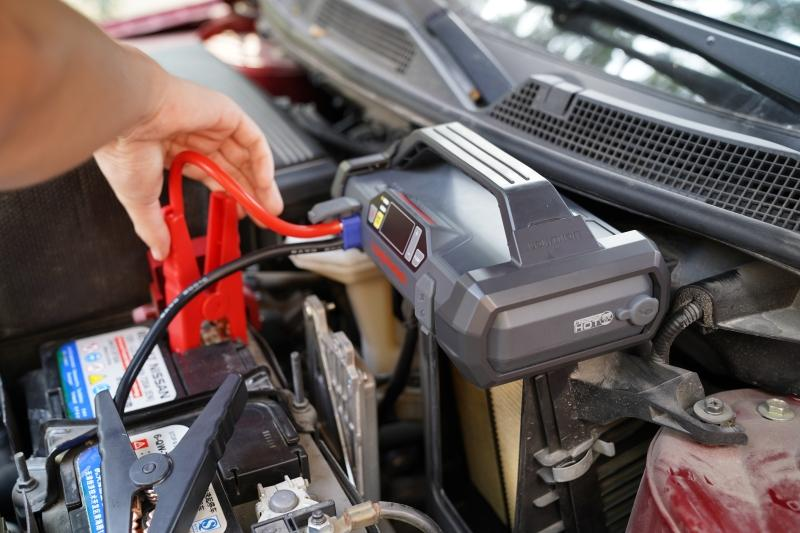
- Connect the red clamp to the positive (+) terminal.
- Connect the black clamp to the negative (-) terminal or the vehicle’s designated grounding point, as specified by the manufacturer.
- Make sure the clamps are secure and properly positioned.
Never allow the two clamps to touch each other.
Step 5: Start the Vehicle
Turn on the jump starter if required by the manufacturer’s instructions.
Wait for the appropriate indicator or ready signal if your model has one.
Then attempt to start the vehicle.
Avoid repeatedly cranking the engine for long periods. If the vehicle does not start, stop and check the connections and the jump starter’s instructions.
Step 6: Disconnect Carefully
Once the vehicle starts successfully, follow the manufacturer’s recommended procedure for disconnecting the cables.
Keep the clamps from touching each other or other conductive surfaces.
Step 7: Recharge the Jump Starter
After use, recharge your jump starter so it is ready for the next emergency.
If you keep the device in your car for extended periods, periodically check its charge level and storage condition.
Important Safety Tips
Always remember:
- Read the manufacturer’s instructions.
- Use a jump starter compatible with your vehicle.
- Check the battery and cables before use.
- Never reverse the positive and negative connections.
- Never allow the clamps to touch.
- Keep the device away from excessive heat and moisture.
- Don’t use damaged equipment.
- Follow your vehicle manufacturer’s jump-start instructions.
What If the Car Still Won’t Start?
A jump starter cannot fix every starting problem.
If the vehicle still doesn’t start, the problem could involve the battery, starter motor, alternator, fuel system, electrical system, or another component.
In that situation, stop attempting to start the vehicle and contact qualified roadside assistance or a mechanic.
Final Thoughts
A portable jump starter is a convenient emergency tool, but safe operation is essential.
Keep it charged, store it properly, and familiarize yourself with the instructions before you actually need it.